When I first got my driver’s licence (after several attempts), I was thrilled at my new sense of freedom. The world had opened up to me in a new way. I could go where I wanted, when I wanted, and as I began travelling farther afield, I came to love road trips.
My skills were tested in poor weather, changing traffic conditions, and car troubles. But as my skills were tested, my confidence grew. Over the years, I obtained my licences to drive heavy trucks, buses, and motorcycles. Each type of vehicle requires different skills, and the only way to gain confidence in those skills is to challenge them.
Obtaining a licence to operate a motor vehicle requires a person to demonstrate a basic level of competence, but it is in no way an indication of confidence. I know many people who have had their licence for years but choose not to use it for lack of confidence. Perhaps highway driving or inclement weather would see them prefer to keep the licence in a drawer instead of getting out on the road.
Something similar happens with our faith.
James teaches us that faith without works is dead. “What good is it, brothers, if someone says he has faith but does not have works? Can that faith save him?” (James 2:14). It is like the driver’s licence that sits in a drawer. We can look at it and be proud that we have one, but the licence itself is no indication that we can actually drive if we need to—especially somewhere difficult or challenging.
There are times when I have overdriven the limits of my car and the road conditions and found myself in the ditch. Embarrassing? Yes. Devastating? No. In fact, I walked away from those experiences of failure with a better understanding of what my car is—or is not—capable of in different conditions.
My confidence grows because, “I’ve been there before.” If I stayed off the road in every snowstorm, then the surprise storm I didn’t plan for would rock my confidence and overwhelm me.
So what of my faith?
How often am I choosing uncomfortable faith exercises that have the possibility to embarrass me if I fail? Am I choosing to rely on God in progressively more challenging environments so I can experience the confidence of His goodness? Or do I prefer to detour around the hard parts and avoid the possibility of failure and embarrassment?
The point is not to seek out danger or manufacture suffering. It is to stop allowing the possibility of failure to keep us from living in the freedom that Jesus has called us into. We can take the next step of obedience, even when we are unsure of ourselves, because our confidence is not in our own ability. It is in the One who has promised to be with us.
Learning to drive together
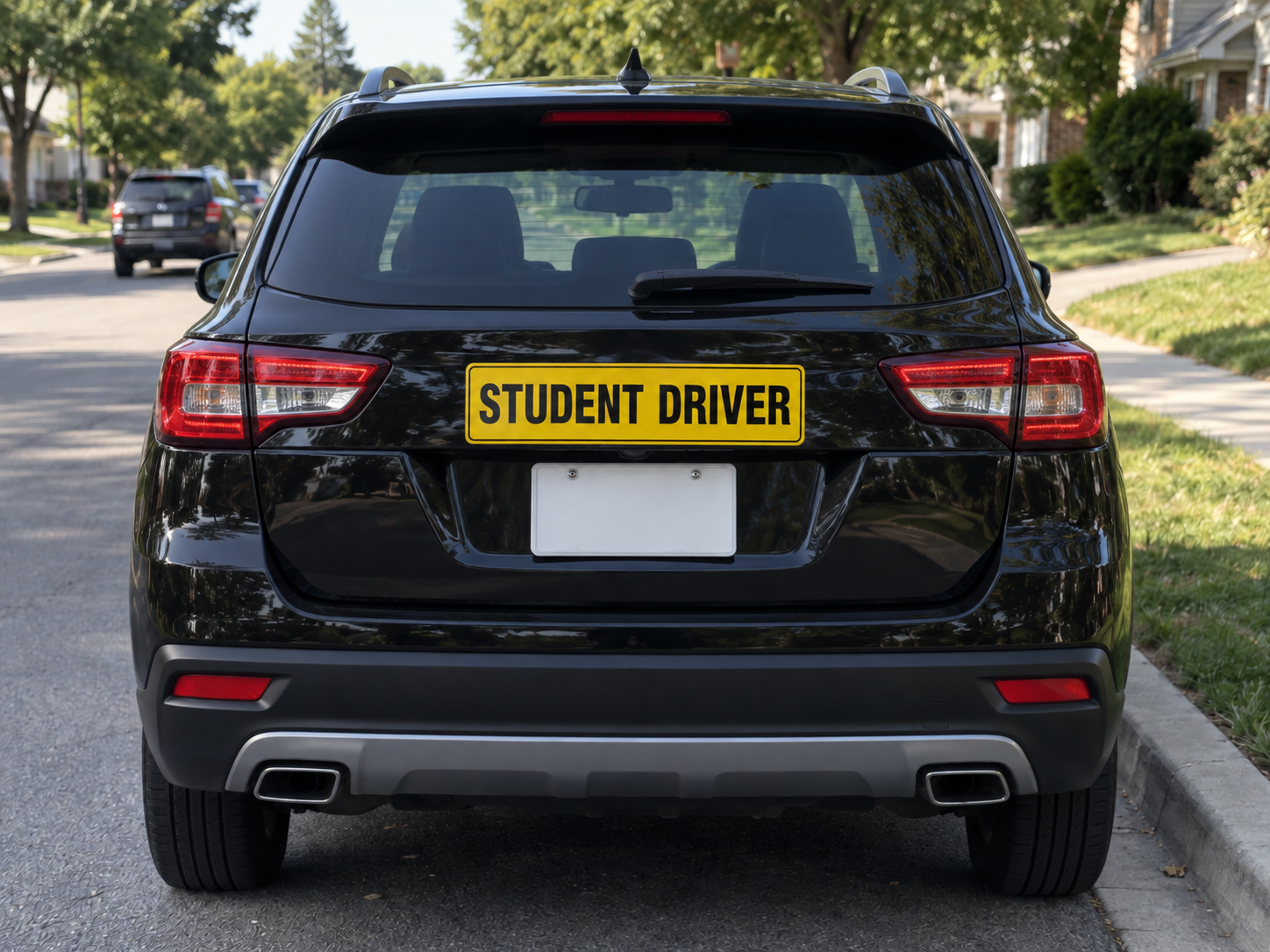
Of course, nobody learns to drive simply by being handed a licence and then turned loose on the highway!
We learn with instructors. We learn with people who have been down the road before us. They explain what to watch for, help us understand the rules of the road, and give us the confidence to try things we might not attempt on our own.
It may seem obvious, but for driving lessons to work the student needs to get behind the wheel. The instructor may have that extra brake pedal, ready to intervene if things become too dangerous, but the purpose of that pedal is not to prevent the student from ever making a mistake. It is to create a safe environment in which the student can learn.
Isn’t that what discipleship is supposed to look like?
In the Kingdom of God there are people who have been following Jesus for decades, and others who are just beginning to discover what it means to trust Him. The goal shouldn’t be for the experienced Christian to do all the driving while the new believer watches from the passenger seat. Nor is it healthy to hand someone a Bible, wish them well, and leave them to navigate every difficult season alone.
We are called to learn together. To encourage one another to take the next step. To offer wisdom when the road is unfamiliar. To be close enough to help when someone gets into trouble, and gracious enough to gently coach the car back on the road.
That means the experienced Christian must be willing to become a driving instructor, and the newer Christian must be given the opportunity to drive.
And perhaps the experienced Christian needs to remember that there are still roads they have never travelled themselves.
Longevity is not maturity
Jesus repeatedly challenged the assumption that those who had been around the longest, or occupied the most prominent religious positions, were necessarily the closest to the Kingdom.
The amount of time we have spent in church is not the same thing as the depth of our faith.
This should be a great encouragement to those who are just discovering Jesus and wondering how they could ever penetrate Christian culture, with its own language, traditions, and expectations. You do not need to spend decades in church before you can begin living the life of the Kingdom.
But it should also be a strong rebuke to those of us who have become comfortable with keeping our faith in the drawer. It is familiar, comfortable, and requires no risk.
We can know the language. We can know the traditions. We can know how to sit on a board, organize a ministry, or lead a meeting. But none of those things are indicators that we are growing in our ability to trust God, love our neighbour, forgive an enemy, or respond faithfully when life becomes difficult.
Can such a faith save us?
A decade on the church roll is not the same thing as a decade of learning to follow Jesus.
The question is not simply, “How long have I had my licence?”
But rather, “What miles have I driven with it?”
The purpose of the driver’s licence is not to obtain something to keep in a drawer. It is to give us the liberty to go places.
And the purpose of our faith is not merely to possess something to make ourselves feel secure. It is to follow Jesus into the fullness of life He has called us to live.
There will be roads we have never travelled. There will be conditions we might rather avoid. There will be moments when we discover that we are not nearly as capable as we thought we were.
But we do not travel alone.
We have a Saviour who is faithful, and we have been given a community in which we can learn, encourage, correct, and support one another. We can help the person who is just beginning to take the next step, while remaining humble enough to receive help when we need it ourselves.
So perhaps this week the question is not, “How long have I been a Christian?”
Perhaps it is, “Where is Jesus inviting me to exercise my faith?”
And who do I need to invite along for the ride?
