What is the difference between what looks good, and what is good for me?
There’s an old comedy bit where the comedian is poking fun at how the media consistently portrays husbands as clumsy neanderthals. The husband is in the background eating a bowl of cereal, exclaiming,
“This tastes good… is it good for me?!”
Caricature aside, I think we have all asked that question from time to time:
“This feels good… but is it good for me?”
The first warning that God gave to the first humans interacting with this new planet was fascinating. Everything on this planet looks good—but not everything is good for you. All the trees look good, but the fruit of some trees will kill you.
Don’t eat the fruit from that tree.
In essence, the first command from the Creator to His creation was simply this:
“Don’t die.”
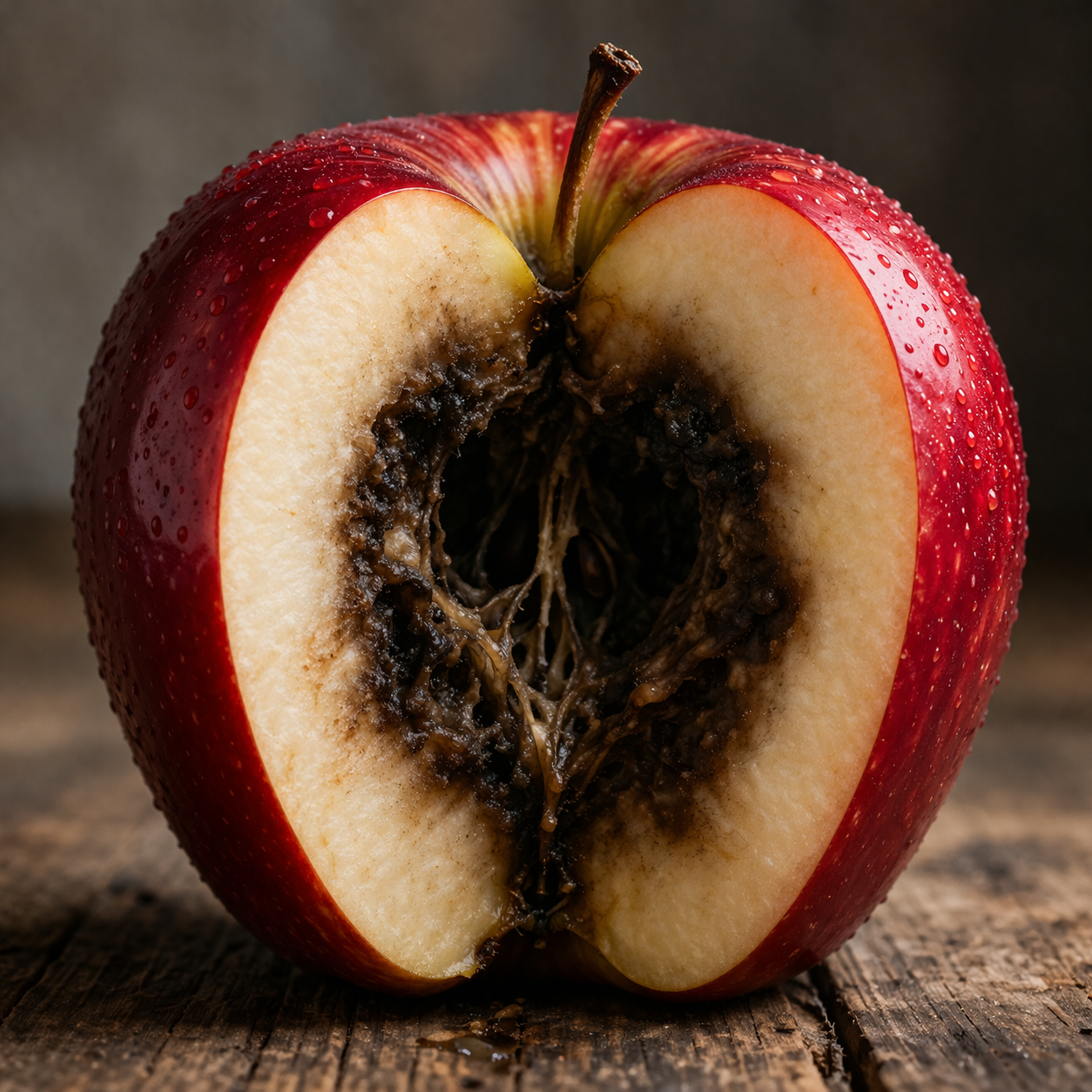
How often has that simple command needed to be repeated over and over again through the lives of humanity, as we grasp at things in this world that look good—or feel good—but ultimately destroy us.
In fact, that is the very definition of a vice: something that looks appealing, something that meets a felt human need—but is actually a trap.
And maybe the word itself gives us a better picture than we realize.
A vice—like a bench vice—doesn’t just hold something… it tightens its grip. Once something is caught inside, it cannot free itself. The more it struggles, the more pressure is applied.
Left to itself, it will remain trapped.
And that is how many of the things we give ourselves to actually function. They promise something good, something satisfying—but once they have us, they begin to close in.
Maybe not immediately. But certainly over time.
So how are we to discern between those things that look good and are good for us to consume, and those things that look good but have death inside?
How did Adam and Eve know? How could they? They were brand new humans in a brand new world. Everything looked good. Everything was shiny and new.
The only way they knew is actually the same way that we know:
by listening to the voice of God.
If we accept that God is our Creator, then we accept that He knows more about us and our environment than we ever will. And if we trust that He loves His creation with an unrelenting love, then we can trust that His commands and His warnings are in place for our life.
The Psalmist says that the one who listens and meditates on the words of the Lord will be like a tree planted by streams of water, giving fruit to those around it.
Not only does God care so deeply about my life and wellbeing that He gave me the counsel of scripture, the testimonies of the saints, and the Holy Spirit Himself to guide me; He also set up an ecosystem whereby when I yield to His design, not only do I have life—my roots attached to the stream—but I give life to others around me. I think that metaphor begins to speak to the concept of “abundant life”.
I bear fruit.
Jesus lived this example through His life and death. His source of life was crystal clear:
“I can do only what I see my Father doing.” (John 5:19)
And yet, Jesus walked directly toward the place where all of humanity had been trapped—the place where the vice had fully closed—the tree of death.
The cross.
But He did not enter into it as one more victim caught in its grip.
He entered into it from the outside.
And in doing so, He did what we could never do for ourselves.
He loosened the vice.
He broke the grip of sin and death by stepping into it and overcoming it once and for all.
Jesus entered into death for us, that we might have life.
That is how great our Heavenly Father’s desire is for His children to experience abundant life.
So maybe the question we need to ask is less:
“Does this look good?”
But more:
“Is this leading me toward life?”
