Water Runs Through It
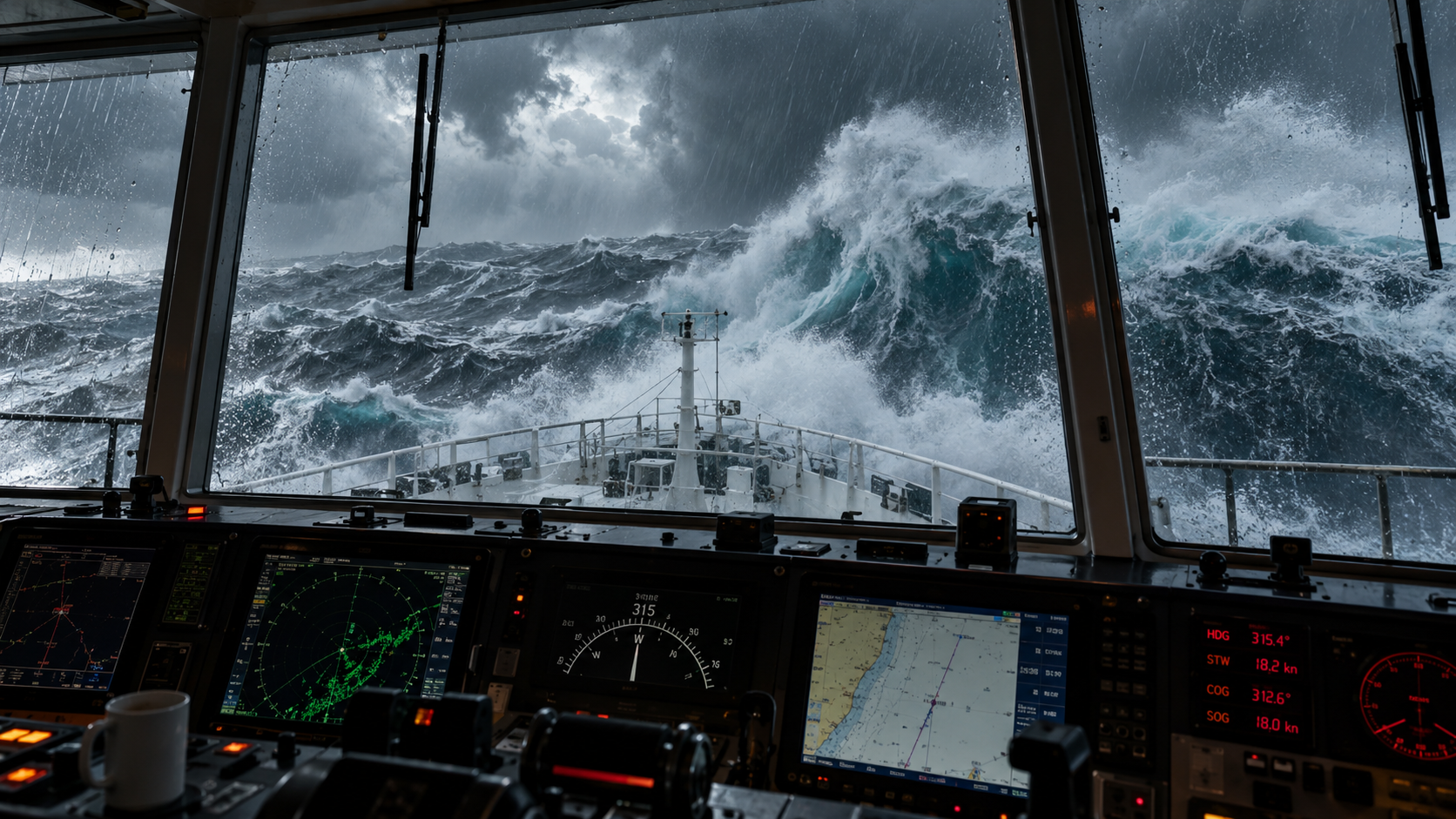
Anyone who has spent time on the ocean when it is angry understands the feelings of fear and powerlessness that a raging sea can evoke.
Several years ago, I made the poor decision to take a Caribbean cruise during the peak of hurricane season and the ship, large as it was, was tossed about in the waves of Hurricane Michael!
Water is one of the great images running through Scripture, and its symbolism tells a remarkable story about the Kingdom of God.
The Bible opens with darkness over the deep and the Spirit of God hovering over the waters.
Dark. Formless. Chaotic.
God speaks, separates the waters and brings order to creation.
A few chapters later, the floodwaters overwhelm the earth. The boundaries of creation seem to collapse as the waters return to cover the land. Yet Noah and his family are carried through those same waters into a renewed world.
Then comes Exodus.
Israel stands trapped between Pharaoh's army and the Red Sea.
The waters divide.
Israel walks through.
Pharaoh follows.
The same waters that deliver God's people swallow the armies of Egypt.
In these cases, water becomes both judgment and deliverance.
And the imagery continues as Israel journeys through the wilderness. Having survived the waters of the Red Sea, they now find themselves desperate for water in the desert.
God brings water from a rock, sustaining His people as they journey toward the Promised Land.
I find that progression fascinating.
The God who delivered His people through the waters now sustains them with water.
Centuries later, Isaiah speaks to a people who once again need rescuing.
God reminds them of the Exodus:
“Thus says the LORD,
who makes a way in the sea,
a path in the mighty waters…” (Isaiah 43:16)
But then He says something unexpected:
“Forget the former things;
do not dwell on the past.
See, I am doing a new thing!” (Isaiah 43:18–19)
The God who once made dry ground through the water now promises to make water in the dry ground.
“I am making a way in the wilderness
and streams in the wasteland.”
Water becomes an image of restoration, provision and life.
And this imagery keeps flowing through Scripture.
The Psalmist writes of “a river whose streams make glad the city of God” (Psalm 46:4), even as the preceding verses describe the roaring seas and shaking mountains.
Ezekiel sees a river flowing from the Temple. As it travels, it grows deeper and stronger. Trees flourish along its banks, fish fill its waters, and eventually it reaches the Dead Sea, where even the lifeless waters are restored.
Everywhere the river flows, life follows.
Then Jesus enters the picture.
He stands in the Jordan River to be baptized, and the Spirit descends upon Him. Later, He speaks of “rivers of living water” flowing from those who believe in Him.
John tells us He was speaking about the Holy Spirit.
Paul takes the imagery even further, describing baptism as our participation in Christ's death and resurrection. We are buried with Him and raised to walk in newness of life (Romans 6:3–4).
Peter even reaches back to Noah, connecting the waters of the flood to the waters of baptism (1 Peter 3:20–21).
The imagery has come full circle. Through Christ, the waters of death have become a passage into new life.
And finally, the Book of Revelation gives us two very different pictures of water.
In Revelation 13, a beast rises from the sea, echoing Daniel's vision of violent kingdoms emerging from turbulent waters.
The nations rage. Empires rise and fall. The powers of this world struggle for dominance.
But when John sees the new creation, the sea is gone.
And in its place?
“The river of the water of life, as clear as crystal, flowing from the throne of God and of the Lamb.” (Revelation 22:1)
The river nourishes the tree of life, whose leaves bring healing to the nations.
The Bible begins with chaotic waters.
It ends with a river flowing from the throne of God.
From chaos to Kingdom.
All this makes me wonder how Christians are supposed to live between those two pictures.
Because the sea is still pretty loud.
Nations threaten nations.
Political movements battle political movements.
Power is measured by influence, intimidation and the ability to impose our will on others.
Everyone seems angry, and everyone seems afraid.
And sometimes I wonder if the Church has become so preoccupied with the turmoil around us that we've begun adopting the same methods.
We raise our voices.
We sharpen our arguments.
We rally against our enemies.
We seem increasingly anxious to defend a Kingdom whose King has already conquered death.
Yet the apostles, writing to Christians living under the often-hostile authority of Rome, offered remarkably different instructions.
“Bless those who persecute you.”
“Do not repay anyone evil for evil.”
“Do not be overcome by evil, but overcome evil with good.” (Romans 12)
“Clothe yourselves with compassion, kindness, humility, gentleness and patience.” (Colossians 3:12)
They understood something about where their readers stood in the biblical story.
Christ had already passed through the waters of death and emerged victorious. His followers had been raised with Him into new life, even while living in a world still embroiled in chaos.
Their confidence in Christ's victory gave them the freedom to live according to the values of His Kingdom, even while the world around them remained in turmoil.
And those values look a lot like the life-giving river Ezekiel saw flowing from the Temple.
A river that brings healing to broken places.
Life to barren places.
Peace to troubled places.
Perhaps that is what the Church is meant to look like in a chaotic world.
A community whose confidence in Christ produces patience instead of panic, generosity instead of self-preservation, and humility instead of hostility.
People who keep loving, serving, forgiving and speaking truth with grace, even when the surrounding culture rewards the complete opposite.
The river in Ezekiel's vision keeps flowing until it reaches the Dead Sea itself.
And even there, life begins to flourish.
What a beautiful picture of the mission of the Church.
The sea may seem louder.
But the river is where history is going.
