One of the stranger realities of Scripture is that God often chooses to bless the many through His commitment to the few.
That seems backward.
If God's desire is to bless the whole world, why does He so often begin by choosing just one?
The modern world tends to view exclusivity with suspicion. We assume that true freedom comes from keeping our options open and our commitments flexible. Yet the biblical story seems to move in the opposite direction. Again and again, God reveals Himself through covenant—a chosen, exclusive, enduring commitment.
The pattern begins in Genesis.
After creating Adam, God declares that something is not good.
It is the first time in Scripture that God identifies a deficiency in creation.
"The Lord God said, 'It is not good for the man to be alone.'"
Most English translations tell us that Eve was created as Adam's "helper," but the Hebrew word is ezer—a word most often used elsewhere in Scripture to describe God Himself as a helper, rescuer, or deliverer.
The first woman is not presented as a servant or an accessory.
She is presented as God's answer to human loneliness and insufficiency.
Adam is blessed through covenant relationship.
The story of humanity begins not with an individual, but with a marriage.
As Scripture unfolds, the pattern expands.
In Genesis 12, God calls Abraham and makes a remarkable promise:
"I will bless you... and all peoples on earth will be blessed through you."
God chooses exclusive covenant as the means by which blessing will flow.
God binds Himself to Abraham.
Abraham becomes the father of Israel.
Israel becomes the people through whom God reveals Himself to the world.
The covenant is exclusive, but the blessing is expansive.
Through one family, God intends to bless every family.
That same pattern reaches its fulfillment in Christ.
Throughout the New Testament, the Church is described as the Bride of Christ. Paul reaches all the way back to Genesis, quoting the words spoken about husband and wife becoming one flesh, and then says something astonishing:
"This is a profound mystery—but I am talking about Christ and the church."
In other words, marriage was never just about two people.
From the very beginning, it was pointing beyond itself.
The covenant of marriage is one of the primary images God uses to reveal His own heart.
The faithful husband reflects something of Christ.
The faithful wife reflects something of God's covenant people.
The covenant itself reflects God's unwavering commitment to those He loves.
Marriage becomes theology made visible.
And perhaps this is where we encounter the deepest mystery.
It is through exclusivity that God accomplishes inclusivity.
God chooses Abraham in order to bless the nations.
God chooses Israel in order to reveal Himself to the world.
Christ binds Himself to His Church in order that salvation might be proclaimed to all.
Likewise, a husband and wife choose one another to the exclusion of all others.
That institution appears narrow from the outside.
Yet the fruit of that commitment is remarkably broad.
Children are nurtured.
Friends find refuge.
Neighbours experience hospitality.
Communities gain stability.
Future generations inherit blessing.
The covenant excludes everyone from the marriage itself, but the blessing of that covenant spills over to everyone around it.
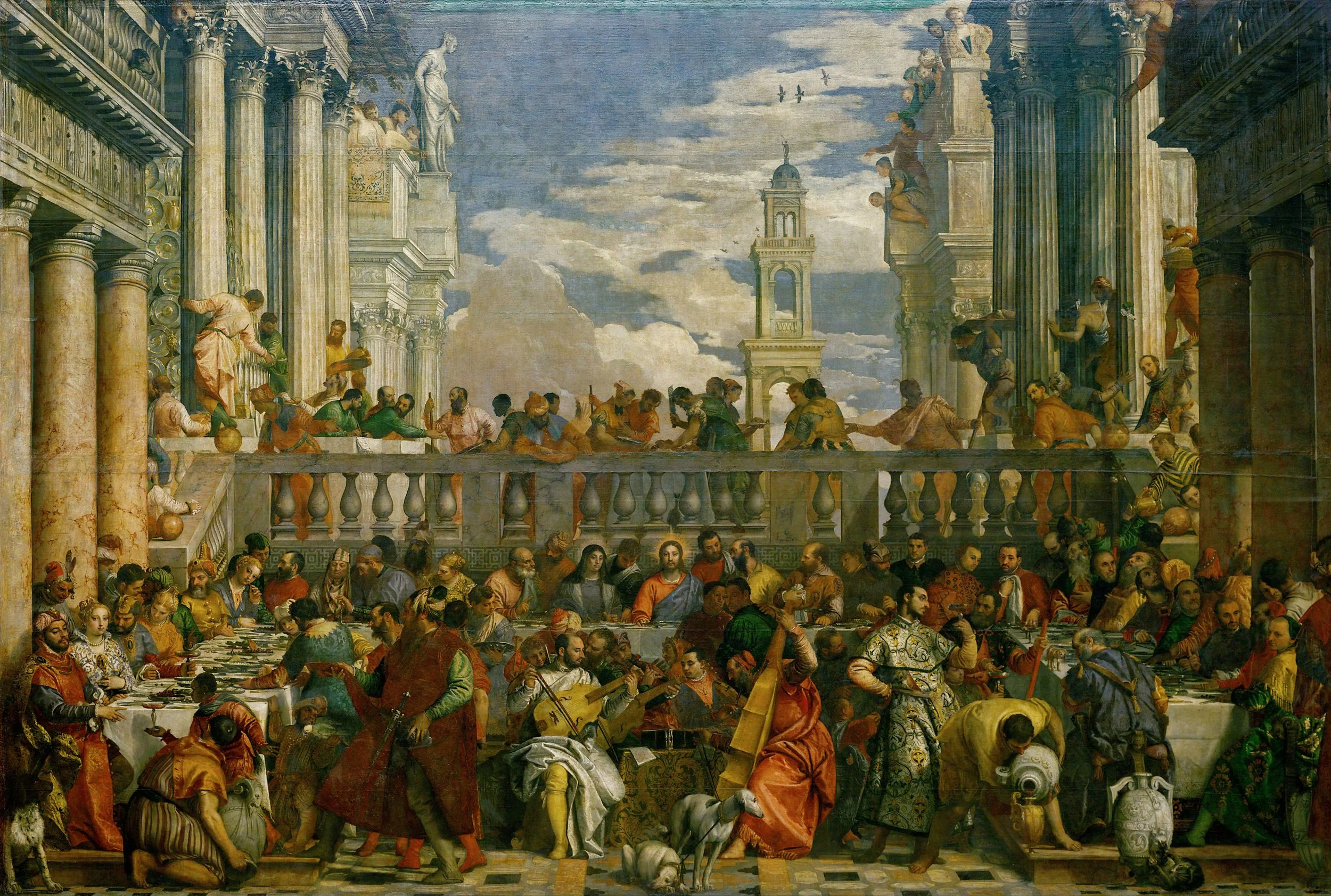
Veronese, The Marriage at Cana (1563)
This may also explain why a wedding celebration at Cana is where Jesus first chooses to reveal His divine nature.
His first miracle does not occur in a temple, nor before kings or religious leaders.
It occurs at a wedding.
In the middle of a covenant celebration, water becomes wine.
The miracle serves not only as a revelation of Christ's divinity, but as a foreshadowing of a new covenant through which God's blessing will flow into the world.
The prophets describe God's relationship with His people through the language of covenant fidelity.
Jesus consistently undergirds the institution of marriage and elevates the dignity of women in a culture that would prefer to see women as powerless.
Paul calls husbands to love sacrificially, not rule selfishly—to love their wives as Christ loved the Church and gave Himself up for her.
The biblical vision of marriage is not built on ownership.
It is built on covenant.
Perhaps that is why marriage remains such a powerful image of God's love.
When a husband and wife continue choosing one another year after year, they proclaim something to the world.
When forgiveness triumphs over resentment.
When commitment outlasts convenience.
When love remains long after lust has cooled.
They bear witness to a deeper reality.
They remind us that we worship a God who does not abandon His promises.
A God who binds Himself to His people.
A God whose faithfulness becomes a blessing to the world.
Marriage is not simply a private arrangement between two people.
It is a living parable.
A small but beautiful picture of the covenant love that holds the universe together.
